Fulton: India’s World Cup Motivation “Was Not As High” — the Asian Games Came First
Craig Fulton doesn’t dodge the awkward question. India’s year had two halves that don’t sit comfortably together: eighth at the World Cup, then gold at the Asian Games and another Asian Champions Trophy title a few weeks later. Asked why, the head coach gave an answer most coaches wouldn’t.
The motivation wasn’t the same. Not for the World Cup.
“If you look back at why there’s not such a history of performance in the World Cups, and then if you have the World Cup and three weeks later, you have the Asian Games, we have a clash of priorities,” Fulton told Sportstar. “If you get injured in the World Cup and you don’t play Asian Games, you lose out. So I don’t think the motivation was as high for the World Cup.”
It’s a striking admission, and he puts it down to how the system works rather than any one player. The Asian Games carried the Olympic ticket for Los Angeles 2028, and the states reward Asian Games and Olympic success heavily. “Players know financially if we win a gold medal and qualify, they get ‘X’ already,” he said. “The focus is much higher.” The World Cup, three weeks earlier, didn’t carry the same weight. “Psychologically, in the big picture, Asian Games and Olympics, they’re on two different levels.”
Fulton also pointed out that building two separate squads for the two tournaments wasn’t an option. Teams had to be named 60 days before the Asian Games, for visas, accreditations and clothing. “If I looked at the squad and the performances from the World Cup, and then selected them for the Asian Games, that would have been ideal. But it’s not possible because the timing is so close.”
The Asian Games run, and the Pakistan semi
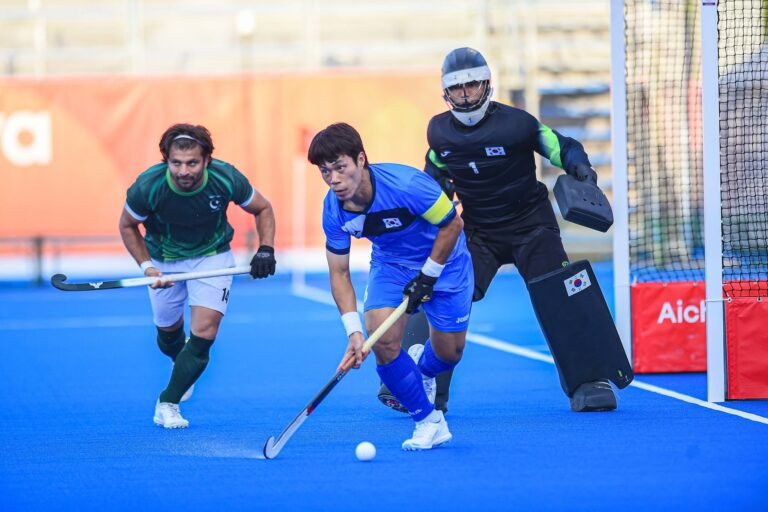
Once the Asian Games started, Fulton says the group found its level. India dominated the pool, then beat Pakistan in a semi-final that carried everything: a place in the final and an Olympic spot.
“When you play Pakistan in a Pro League, it’s not really for anything besides pride,” he said. “But now you’re playing them for a place in the final of the Asian Games and the ability to earn an Olympic spot, everything changes. I’m glad that we did a good job in the second half and found a way to win.”
The ACT a week later had its own pull. India hadn’t played international hockey at home in Punjab for 15 years, and doing it in front of friends, families and their state academies mattered. India won that one too, beating Japan 4-1 in the Mohali final for a sixth title and a third in a row.
Nilakanta’s farewell was his own call
Fulton also cleared up one of the year’s talking points. Nilakanta Sharma retired from internationals after the ACT, 163 caps and 20 goals, a Tokyo bronze on his record. Fulton says the midfielder told him during the Asian Games that he wanted his last tournament to be in India, and the coach made it happen.
“He really just wanted to play his last tournament in India and I made that happen with the selection, which was the right call for him. He felt he had reached where he wanted to go with his career and it was time for him to step away.”
On the other senior names in the reports, Jarmanpreet Singh, Mandeep Singh and Amit Rohidas, Fulton was careful. “There’s nothing official there. We just have to see what happens with the Hockey India League. Then look after the India A Tour that we go on.”
What comes next: New Zealand, then a new squad
The rebuild is already moving. Fulton is back in Bengaluru working with a group of inexperienced internationals and junior players for the test series in New Zealand starting next week. An India A group travels, with Sanjay captaining the young squad for the centenary series in Auckland on 19, 21 and 22 November, marking 100 years since India’s first hockey tour to New Zealand in 1926.
Then everyone comes together for the Hockey India League in January, and a new squad gets picked for the Pro League home leg in February. The goal is depth, almost three players for every position, so losing one player doesn’t leave a hole. “We take the India A group to New Zealand. Then hopefully, if there is the Hockey India League that gets played in January, we choose a new squad for Pro League in February.”
Fulton wants the group tested against the best. India won all 14 matches they played against Asian teams this year, but the results against European sides weren’t as strong, and India sit eighth in the world. “We need to play the best, the top five teams, top six teams, as much as we possibly can,” he said. “We want to try and repeat the podium and change the colour of the medal and try and win gold in LA.”
There are no major tournaments in 2027 apart from the Pro League, so he wants as many games as possible that year, somewhere between 30 and 40, to build combinations. India have already qualified for LA 2028, which he says is a real advantage. “We’re fortunate that we are like Belgium and the USA. We’ve already qualified, so we can plan.”
He’s also thinking about freshness, not just youth. Big European teams rest their key players for six months at a time to focus on league hockey and conditioning, then come back looking like new players. “There’s that side of it,” he said. “Then there’s the other side of it where there are younger players who are pushing and need an opportunity. Then they deserve that opportunity because they are already overtaking that senior player.”
And the orange jersey? He’s a fan
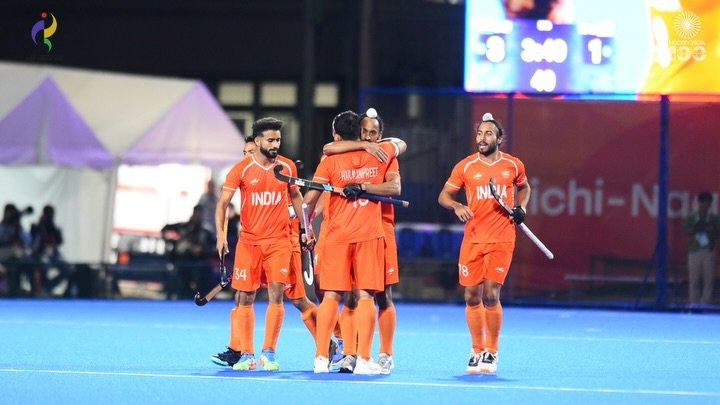
Finally, the jersey. India’s switch from blue to orange before the World Cup got plenty of attention, and Fulton says it’s made a real technical difference on a blue pitch.
“The more that you play on a blue pitch, the more contrast you can create makes a difference,” he said. “When we play Japan in the final, and they play in dark blue on a dark blue pitch at night, it’s not easy. Now we’re playing in orange, still playing for India, but in orange on a blue pitch at night, we see each other like clear as day. And that makes a big difference.”
The orange socks help too, he says. Blue socks on a blue pitch, with black shoes, clash over time. Was it ever a distraction? “No. We are here to play hockey.”
For our money, this is the most honest interview Fulton has given all year. The World Cup eighth-place finish stung, but he isn’t hiding behind fine margins. The calendar, the incentives and the clash of priorities explain plenty, and the fix he describes is a proper one: a younger group getting its audition in New Zealand, a new squad for February, and two years of planning towards a gold-medal shot in LA. The orange jersey, it turns out, was the least of it.